
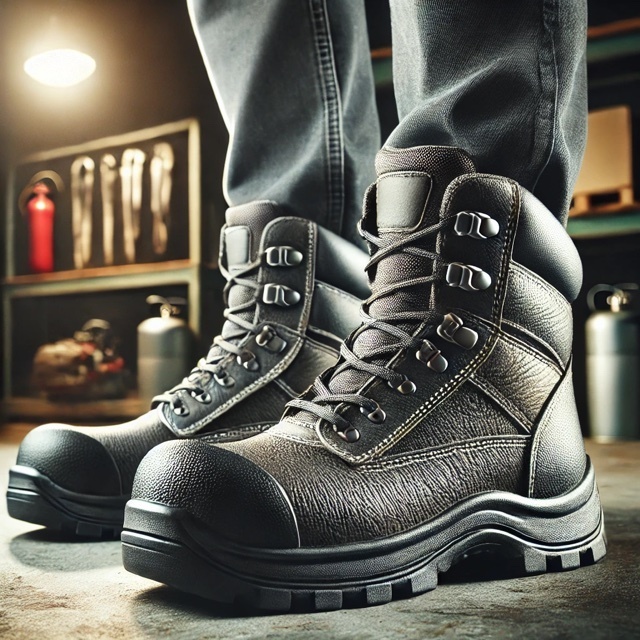
ESD Safety Boots for Electronics and Assembly Workers: Anti-Static Protection for 2025 Workplaces
In modern electronics manufacturing and precision assembly environments, even the smallest static discharge can destroy sensitive components or disrupt production. As technology evolves, so does the need for advanced personal protective equipment that goes beyond traditional safety features. ESD safety boots have become a crucial standard across Europe’s industrial and electronics sectors in 2025, ensuring static control, comfort, and durability for high-precision professionals. At Optimum BHP, premium models from Uvex, Procera, and Portwest offer an ideal combination of ESD compliance, breathability, and lightweight comfort. Designed to protect both workers and equipment, these boots embody the next generation of electrostatic-safe PPE for Europe’s high-tech industries.
There’s more to read on our blog:
Insulated Safety Boots for Winter 2025 – Comparing VM Footwear Wellington S3, Ardon Firwin G3131 S3, and Procera Winter Strong S3
Urgent vs. Premium Brands: Is Cheap Winter Workwear Good Enough in 2025?
Insulated Safety Boots for Winter 2025 – Comparing Solid Gear Talus GTX High S3, Portwest Eden FD15 S3, and Procera Winter Strong S3
Insulated Safety Boots for Winter 2025 – Comparing PPO 0157 S3, Ardon Rover G3390 S3, and Solid Gear Talus GTX High S3
Comparison of Portwest DX465, Portwest C467, and Sara Workwear Drogowiec Winter 3-in-1 Jackets
Comparing Jeans Work Trousers in 2025 – Ardon, Polstar & Neo Tools
⸻
Why ESD Safety Boots Are Critical in Modern Electronics
Electrostatic discharge (ESD) can reach up to 35,000 volts — invisible yet powerful enough to destroy microchips, sensors, or circuit boards instantly. For this reason, industries like microelectronics, semiconductor manufacturing, and automotive assembly require footwear that dissipates static safely into the ground. Uvex and Procera lead in innovation with conductive threads integrated directly into the sole structure, ensuring consistent ESD control in both dry and humid conditions. Portwest complements these designs with carbon-fiber inserts that stabilize electrical resistance across the entire boot. Together, these solutions protect sensitive components, reduce failure rates, and maintain product integrity — proving that properly grounded PPE is as vital as any other safety measure in electronics production.
⸻
Advanced Materials: Combining Safety and Comfort
Traditional ESD footwear often traded comfort for function, but 2025’s generation of ESD work boots has changed that balance completely. Procera incorporates lightweight composite toe caps and flexible midsoles that ensure total protection without metal parts, preventing conductivity. Uvex uses dual-layer PU outsoles that provide stable grounding and long-term cushioning, while Delta Plus focuses on anti-slip SRC soles that enhance safety on smooth factory floors. Breathable microfiber uppers reduce moisture buildup, while antibacterial linings prevent odor and irritation — a vital factor for workers spending 10–12 hours per shift. These materials redefine industrial comfort, creating PPE that feels as natural as everyday footwear yet performs to the highest safety standards.
⸻
Ergonomic Innovation and Worker Efficiency
In environments where precision and endurance matter, comfort is directly tied to performance. Base Protection and Procera integrate shock-absorbing midsoles and energy-return insoles that reduce leg fatigue during continuous movement. Portwest enhances ergonomics with contoured insoles that support the foot arch and maintain posture alignment throughout long shifts. This attention to design not only minimizes physical strain but also improves productivity by allowing workers to maintain focus longer. Delta Plus complements the system with reinforced heel zones that absorb micro-vibrations from factory machinery. These innovations make ESD safety boots not just protective gear — but essential performance tools for the new generation of precision workers.
⸻
Sustainability and Manufacturing Ethics in ESD Footwear
Environmental and ethical manufacturing are now inseparable from modern PPE design. Brands like Cofra and Lemaitre are pioneering the use of recycled microfibers, water-based adhesives, and biodegradable soles in their ESD-certified lines. Delta Plus adopts low-emission production methods, reducing carbon output without sacrificing durability or conductivity control. Optimum BHP ensures that all listed products comply not only with EN ISO 20345 standards but also with EU environmental directives, aligning workplace protection with sustainability goals. This holistic approach demonstrates that innovation in ESD PPE extends beyond the factory floor — it shapes a responsible future for the entire industry.
⸻
Versatility Across Multiple High-Tech Applications
While designed primarily for electronics and assembly, ESD safety boots are also widely used in laboratories, cleanrooms, automotive facilities, and data centers. Procera produces models that transition seamlessly between dry assembly halls and controlled environments, maintaining consistent discharge resistance. Uvex emphasizes lightweight structures ideal for technicians and engineers working across different departments. Base Protection and Delta Plus provide multipurpose ESD footwear that supports standing, walking, and kneeling tasks without fatigue. These adaptable designs ensure protection, efficiency, and long-term durability — essential attributes for the ever-evolving European electronics sector.
⸻
FAQ – ESD Safety Boots for Electronics and Assembly Workers
1. Why are ESD safety boots essential in electronics and assembly industries?
Because they prevent electrostatic discharge that can damage sensitive components and disrupt production processes.
2. What does “ESD” stand for?
It stands for Electrostatic Discharge — the sudden flow of electricity between two charged objects.
3. Which brands make top-quality ESD footwear?
Leading manufacturers include Uvex, Procera, and Portwest.
4. How do ESD boots differ from standard safety boots?
They contain conductive elements that safely ground static electricity, preventing discharge near electronics.
5. Are ESD boots non-metallic?
Yes — they use composite materials like carbon fiber and Kevlar to remain lightweight and non-conductive.
6. Do they meet European safety standards?
Yes — all ESD models at Optimum BHP are EN ISO 20345 and EN 61340 compliant.
7. Are ESD safety boots suitable for cleanrooms?
Yes — their anti-static, dust-resistant designs meet cleanroom and laboratory requirements.
8. Do they provide slip resistance?
Absolutely — Delta Plus and Procera ensure SRC-rated traction on smooth surfaces.
9. Can they be used in other industries?
Yes — they’re ideal for automotive, data centers, and maintenance work where static discharge is a concern.
10. Are ESD boots breathable for long shifts?
Yes — advanced mesh linings and moisture-wicking membranes maintain airflow and comfort.
11. How often should ESD boots be replaced?
Typically every 18–24 months, depending on usage intensity and ESD testing results.
12. How do I maintain ESD footwear?
Clean with non-aggressive detergents, avoid wax-based treatments, and test ESD resistance regularly.
13. Are sustainable ESD models available?
Yes — Cofra and Lemaitre produce eco-friendly designs using recycled materials.
14. Can ESD boots replace ESD flooring or mats?
They complement those systems but don’t replace them — both are essential for complete protection.
15. Where can I buy certified ESD safety boots for 2025 workplaces?
At Optimum BHP — Europe’s trusted source for advanced, compliant, and sustainable PPE for electronics and precision assembly teams.