
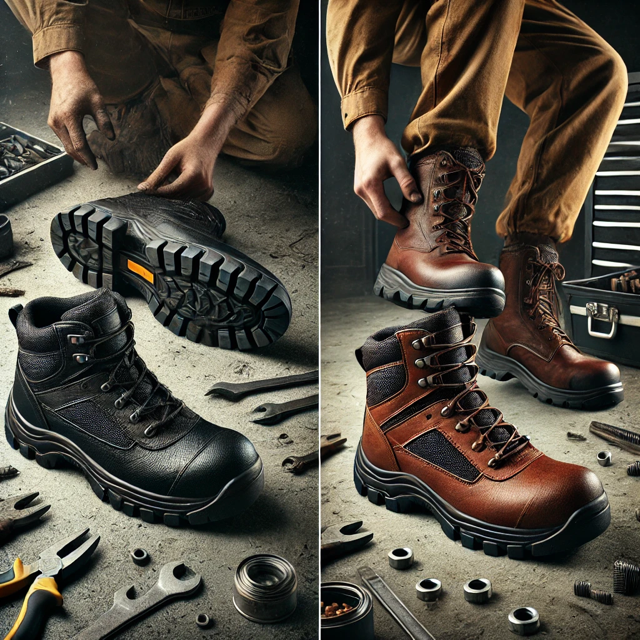
Steel Toe vs. Composite Toe Safety Shoes: Which Offers Better Protection in 2025?
The debate between steel toe and composite toe safety shoes continues in 2025 as both technologies evolve to meet modern workplace demands. Steel toe footwear, like that from Procera, Portwest, or Delta Plus, has long been the industrial standard, offering unmatched resistance to heavy impacts and compression. However, composite toe shoes from Base Protection, Uvex, or Ardon have gained popularity thanks to their light weight, non-conductive properties, and thermal insulation. Each type serves distinct needs — and the right choice depends on your job, environment, and comfort expectations. For guidance on certified footwear, visit Optimum BHP or explore practical insights on the blog and in the FAQ section.
Check out our other blog posts:
CXS Canis Chivay Winter, Portwest A225 Rigger Winter & Ardon Pony Winter – Comparing Insulated Leather Gloves for Reliable Winter Protection
Comparison of Women’s Jackets: Portwest S574 Ladies 3-in-1, Malfini Pacific 534, and Portwest S571 Elgin 3-in-1
Comparison of Portwest C465 Bomber, Portwest S431 Iona Traffic, and Projob 4411 3-in-1 Jackets
Top Winter Work Jackets 2025: Portwest DX430 Hi-Vis Class 2 vs. Sara Comfort Hybrid vs. Procera Vigor
Best Budget Reflective Winter Jackets from Urgent 2025: Stay Safe and Warm Without Overpaying
CXS Canis Winter Workwear for Forklift Operators in 2025: Safe and Warm Clothing for Warehouse Logistics
⸻
The Strength and Reliability of Steel Toe Footwear
Steel toe work boots remain the most traditional and widely used form of protective footwear across construction, heavy industry, and logistics. Models from Procera, Delta Plus, and CXS Canis offer exceptional compression resistance, typically rated up to 200 joules of impact. Steel provides robust protection against falling objects, crushing forces, and mechanical hazards. These boots are ideal for workers handling machinery, metal parts, or heavy cargo. Their only downside is slightly higher weight and less thermal insulation. However, modern models now include cushioned midsoles and lighter steel caps, making them more comfortable than ever.
⸻
Composite Toe Footwear: Lightweight and Innovative
Composite toe safety shoes are made from non-metallic materials such as fiberglass, carbon fiber, or Kevlar. They provide the same level of protection as steel while reducing overall weight by up to 30%. Brands like Base Protection and Uvex are leading innovation in this area, creating ergonomic footwear perfect for electricians, airport staff, and maintenance workers. Because they are metal-free, composite shoes are non-conductive and thermally neutral — they don’t heat up in the sun or freeze in winter. For all-day comfort, Ardon and Ogrifox offer breathable composite designs ideal for long indoor shifts.
⸻
Thermal and Electrical Safety Differences
The biggest distinction between the two technologies lies in conductivity and temperature behavior. Steel conducts heat, cold, and electricity — which can be problematic in extreme environments. Composite materials, on the other hand, are non-conductive, offering superior protection for electricians or technicians working around live circuits. Uvex and Julex models certified with ESD and anti-static properties prevent static buildup and electrical shocks. Additionally, composite footwear provides better thermal insulation, keeping feet warmer in winter and cooler in summer — a major advantage for year-round comfort.
⸻
Weight, Comfort, and Productivity Factors
Long shifts demand lightweight, ergonomic footwear. Composite-toe shoes reduce fatigue, allowing smoother walking and improved posture during repetitive movements. Models from Base Protection or Ardon use energy-return midsoles and anti-fatigue footbeds to maximize comfort. Meanwhile, heavy-duty jobs still benefit from the added sturdiness of Portwest or Procera steel boots. Both categories now include advanced cushioning, breathable linings, and slip-resistant outsoles to meet modern ergonomic expectations. In 2025, comfort is as crucial as safety — and modern PPE footwear ensures both.
⸻
Durability and Maintenance: Steel vs. Composite
Steel toe shoes generally last longer in extreme mechanical conditions due to their structural integrity, while composite footwear excels in lighter or indoor environments. Steel toes, however, can dent if severely impacted, whereas composite caps bounce back without permanent deformation. Maintenance differs too: leather models like Cofra and Lemaitre benefit from regular waterproofing, while synthetic composite shoes require minimal care. Both types should be inspected every 12–18 months to ensure ongoing protection. With proper care and cleaning, either option can offer years of reliable service — available now in certified collections at Optimum BHP.
⸻
Choosing the Right Type for Your Profession
If you work in construction, manufacturing, or heavy machinery, go for steel toe footwear like Procera or Portwest. For electricians, logistics staff, and airport crews, composite toe shoes from Uvex or Base Protection are a better fit due to their lightness and anti-static properties. Hybrid models are also emerging, blending the toughness of steel with the comfort of composite materials. Optimum BHP offers expert advice and a wide range of certified products to help you choose the best model for your field.
⸻
FAQ – Steel Toe vs. Composite Toe Safety Shoes
1. What’s the main difference between steel and composite toe shoes?
Steel toes use metal for maximum strength; composite toes use non-metal materials for lightness and insulation.
2. Are composite toe shoes as safe as steel ones?
Yes — both types must meet EN ISO 20345 impact standards (200J protection).
3. Which type is lighter?
Composite models from Base Protection are about 30% lighter than steel ones.
4. Are steel toe boots colder in winter?
Yes, metal conducts temperature — choose Uvex composite models for insulation.
5. Which is better for electricians?
Composite or ESD-certified footwear from Julex and Uvex.
6. Are steel toes magnetic?
Yes, which may affect work near sensitive equipment or metal detectors.
7. Do composite toes crack more easily?
No — they flex better and resist cracking under repeated stress.
8. Are composite shoes waterproof?
They can be — Portwest and Procera offer S3 waterproof composite models.
9. Which type lasts longer?
Steel generally lasts longer under heavy industrial conditions, but composite is better for comfort and light use.
10. Are steel toes suitable for airport workers?
Not ideal — composite models are non-metallic and airport-safe.
11. Do composite shoes protect against static electricity?
Yes, look for ESD certification in Uvex or Julex shoes.
12. Are steel toe boots heavier?
Yes — usually by 200–300 grams per pair.
13. Can composite shoes deform after impact?
No, composite materials regain shape, unlike dented steel caps.
14. Which shoes are better for long hours of standing?
Lightweight composite footwear from Ardon or Ogrifox.
15. Where can I buy both steel and composite safety shoes online?
At Optimum BHP — Europe’s trusted store for certified work footwear by Procera, Base Protection, Uvex, and more.