
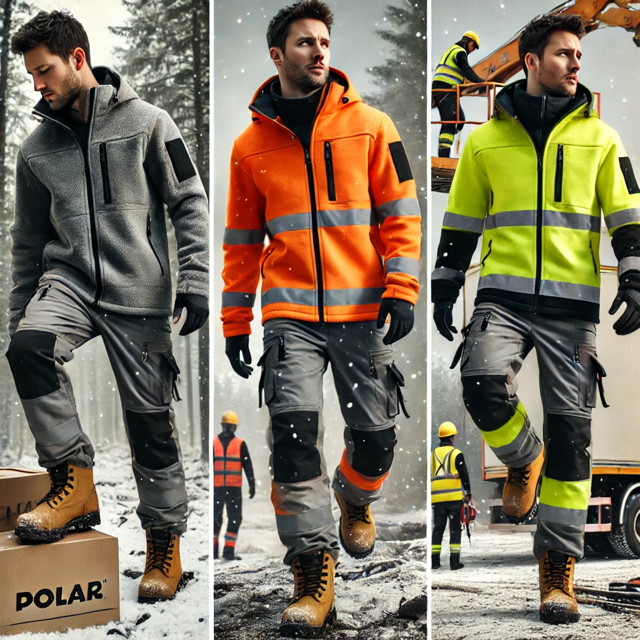
The Advantages of REIS Softshell Jackets as Lightweight, Wind-Resistant Outer Layers for Cool and Mild Winter Conditions
Softshell jackets are valued for their balance of comfort, flexibility and wind resistance, making them an excellent option for cool weather and milder winter days. REIS softshell designs combine lightweight fabrics, breathable membranes and practical construction that supports mobility without compromising protection. Models such as the K-VIS REIS Softshell Jacket (with insulated and reflective features) demonstrate the brand’s ability to integrate softshell flexibility with padded warmth. This article explores how REIS softshell jackets function as versatile outer layers in transitional and cold seasons.
Browse other topics on our blog:
Comparison of Portwest C466 Bomber, Portwest S574 Women’s, and Lahti Pro L40940 3-in-1 Jackets
Cold-Resistant Work Boots for Arctic Conditions: Extreme Protection in 2025
Procera Winter Workwear for Truck Drivers and Long-Haul Transport Crews: Comfort and Functionality on the Road
Thermal Safety Boots for Warehouse and Logistics Workers: Balancing Warmth, Grip, and Flexibility in 2025
Portwest Winter Protection for Construction Supervisors: DX460 Jacket, C387 Action Trousers and B029 LED Beanie for Safety and Visibility
Alpha Winter HV Jackets: High-Visibility Insulated Workwear for Outdoor Crews
⸻
1. Lightweight Construction That Improves Everyday Comfort
Softshell jackets are known for their low weight and freedom of movement. The K-VIS REIS Softshell Jacket offers a flexible outer layer that reduces heaviness compared to traditional winter coats. This lightweight design supports comfort during walking, bending and routine activity.
⸻
2. Wind-Resistant Fabrics That Maintain Warmth
Wind is a major factor in winter discomfort, and softshell jackets reduce its impact significantly. The flexible yet dense outer fabric helps maintain stable body temperature by blocking cold airflow. This makes softshell outerwear suitable for days when insulation is needed but not at maximum levels.
⸻
3. Water-Resistant Properties for Light Rain and Moisture
While softshell jackets are not typically designed for heavy rainfall, they provide reliable resistance against light rain, mist and moisture. This helps preserve warmth and prevents clothing layers underneath from becoming damp. The K-VIS REIS Softshell Jacket includes a water-resistant membrane that enhances this protective performance.
⸻
4. Breathable Design That Prevents Overheating
Softshell materials allow excess heat and moisture to escape while maintaining warmth. This ventilation helps prevent sweating, especially in situations that involve movement or changing temperatures. Balanced breathability supports comfort throughout the day.
⸻
5. Compatibility With Layered Winter Systems
Softshell jackets are ideal outer layers for layered outfits. They work effectively over fleece mid-layers such as the POL-POLAREX REIS Fleece and pair well with insulated trousers like the SPTO REIS Pants. This flexibility allows the wearer to adjust insulation levels depending on temperature.
⸻
6. Practical Features That Support Functionality
Softshell jackets often include functional details such as adjustable cuffs, zippered pockets and comfortable ergonomic shaping. These features enhance usability and provide convenience during winter and transitional seasons. The K-VIS REIS Softshell Jacket includes reflective elements for added visibility, supporting safety in low-light environments.
⸻
Conclusion: The Advantages of REIS Softshell Jackets as Lightweight, Wind-Resistant Outer Layers for Cool and Mild Winter Conditions
REIS softshell jackets offer a practical balance of wind resistance, water protection, comfort and flexibility. Their lightweight design makes them suitable for mild winters, early spring, autumn and transitional periods where full insulation is unnecessary. When combined with fleece layers, insulated trousers, gloves and accessories, softshell jackets play a valuable role in maintaining comfort across a wide range of temperatures.
⸻
FAQ — REIS Softshell Jackets
1. What makes softshell jackets useful in cool weather?
Their wind resistance and flexibility support comfort.
2. Are REIS softshell jackets warm?
They provide moderate insulation suitable for mild winter conditions.
3. Are softshell jackets waterproof?
They resist light rain but are not fully waterproof.
4. Does the K-VIS REIS model offer good protection?
Yes. It features insulation and water-resistant fabric.
5. Are softshell jackets breathable?
Yes. They release excess heat and moisture.
6. Do REIS softshell jackets pair well with fleece layers?
Yes. They integrate perfectly with POL-POLAREX REIS.
7. Are softshell jackets flexible?
Yes. Their materials support natural movement.
8. Are softshell jackets lightweight?
Yes. They are lighter than most insulated jackets.
9. Do REIS softshell jackets withstand daily use?
Yes. They are made from durable outer fabrics.
10. Are softshell jackets suitable for layering?
Yes. They function well as top layers over mid-layers.
11. Do softshell jackets help maintain warmth?
They block wind and retain moderate heat.
12. Are softshell jackets comfortable?
Yes. Their ergonomic construction improves wearability.
13. Do softshell jackets work with winter trousers?
Yes. They pair with trousers like SPTO REIS.
14. Are reflective softshell jackets available from REIS?
Yes. The K-VIS REIS Jacket includes reflective elements.
15. What completes a system with softshell jackets?
Fleece layers, insulated trousers, gloves, hats and winter boots.